American Corrections: From Early Penitentiaries to the Big House Era

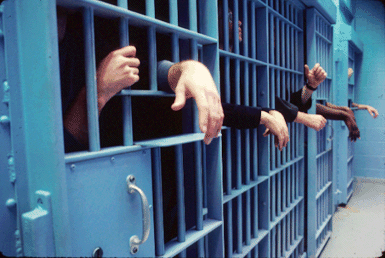
American Corrections: From Early Penitentiaries to the Big House Era
By Dr. Michael Beshears and Dr. Michelle Beshears
The history of American corrections reflects a continual struggle to balance punishment, rehabilitation, deterrence, and institutional control. Throughout the nineteenth and twentieth centuries, correctional philosophies evolved in response to changing social, political, and economic conditions. From the earliest penitentiaries to the emergence of the notorious “Big House” prisons, each era attempted to solve the perceived shortcomings of its predecessor. While each system introduced new methods of confinement and inmate management, many ultimately failed to achieve their stated goals, leaving a lasting influence on the development of modern correctional institutions.
One of the earliest correctional philosophies to emerge in the United States was the Separate System, also known as the Pennsylvania System or Philadelphia System. Developed in the early nineteenth century at Eastern State Penitentiary in Philadelphia, this model was based upon the belief that solitude promoted genuine rehabilitation. Reformers believed that crime resulted from moral and spiritual failings, and that complete isolation would encourage offenders to reflect upon their actions, repent for their crimes, and ultimately reform their character.
Under the Separate System, prisoners remained in solitary confinement at all times. They lived, worked, ate, and slept alone within their individual cells and were prohibited from communicating with other inmates or members of the outside world. Even movement throughout the prison was carefully controlled to prevent prisoners from seeing one another. The silence and isolation were intended to eliminate criminal influences while fostering introspection, prayer, and personal transformation. This philosophy mirrored the secluded lives of monastic communities, where contemplation and self-examination were viewed as paths toward redemption.
Although the Separate System appealed to many reformers, it proved to be extremely expensive to operate. Constructing individual cells capable of supporting complete isolation required significant financial investment. In addition, inmate labor was largely limited to individual craft production, making the system economically inefficient. Many prisoners also suffered severe psychological consequences from prolonged isolation, including depression, anxiety, hallucinations, and mental deterioration. As these shortcomings became increasingly apparent, correctional leaders began searching for a more practical alternative.
The most influential alternative became the Congregate System, more commonly known as the Auburn System, which originated at Auburn Prison in New York. Unlike the Pennsylvania System, the Auburn model sought to combine strict discipline with productive labor. Prisoners continued to sleep alone in individual cells during the evening but were permitted to leave their cells during the day to work collectively in prison industries and eat meals together.
Despite allowing limited physical proximity among inmates, the Auburn System maintained an uncompromising rule of silence. Prisoners were forbidden to speak, make eye contact, or communicate in any manner while working or eating. Guards enforced silence through corporal punishment and severe disciplinary measures. Daily movement throughout the institution followed a military-style routine in which inmates marched in lockstep, emphasizing obedience, order, and institutional control.
Several important similarities existed between the Separate and Congregate Systems. Both relied heavily upon solitary housing during non-working hours, viewed incarceration as a means of moral reform, and imposed highly structured daily routines designed to instill discipline. Both systems also sought to eliminate criminal influences among inmates by severely restricting communication. However, the methods used to accomplish these objectives differed considerably.
The most significant distinction involved inmate labor and social interaction. Under the Separate System, prisoners remained completely isolated and performed individual craft work within their cells. Under the Congregate System, inmates worked together in prison factories performing repetitive industrial labor while remaining silent. Although communication remained prohibited, prisoners could observe one another, creating what historians have described as a society without intercourse, a prison society in which inmates shared physical space without verbal interaction.
Economic realities ultimately determined which system became dominant in the United States. During the nineteenth century, America experienced a shortage of affordable industrial labor, making inmate factory production financially attractive. The Auburn System allowed prisons to generate substantial revenue by manufacturing goods through organized prison labor. In contrast, many European nations possessed an abundant supply of inexpensive factory workers and therefore lacked the same economic incentive to rely upon prison industries. As a result, the Separate System remained considerably more influential throughout Europe than it did in the United States.
During the latter half of the nineteenth century, correctional reform entered another phase with the emergence of the Reformatory Movement. Reformatories shifted attention toward rehabilitation, particularly for youthful offenders believed capable of reform before becoming hardened criminals. The most influential institution of this era was the Elmira Reformatory, established in New York in 1876.
Elmira introduced educational programming, vocational training, military discipline, classification systems, and indeterminate sentencing. Prisoners demonstrating positive institutional behavior could earn an earlier release based on evidence of rehabilitation, rather than simply serving fixed sentences. Although these innovations represented important advances in correctional philosophy, Elmira gradually became increasingly punitive. Strict military discipline, corporal punishment, and authoritarian management practices eventually caused the institution to resemble the penitentiaries it had sought to replace.
Women’s reformatories developed during approximately the same period and reflected a substantially different correctional philosophy. Rather than emphasizing military discipline or industrial labor, women’s institutions focused upon preparing inmates for traditional domestic roles. Educational programs centered on housekeeping, cooking, sewing, child care, and other responsibilities associated with the social expectations of women during the nineteenth century.
Unlike large penitentiaries, women’s reformatories often consisted of small cottage-style residences housing approximately twenty inmates under the supervision of a female matron. Reformers believed this family-like environment encouraged moral development and personal responsibility more effectively than traditional prison cells. Despite these progressive intentions, women’s reformatories frequently excluded minority women based upon racist assumptions regarding morality and femininity, limiting access to rehabilitative opportunities.
By the beginning of the twentieth century, American corrections entered what became known as the Big House Era, which lasted from approximately 1900 through the mid-twentieth century. The term Big House became synonymous with large, centralized maximum-security prisons designed primarily to confine rather than rehabilitate offenders. Unlike earlier penitentiaries that emphasized penance or reformatories that promoted rehabilitation, Big House prisons focused overwhelmingly on custody, discipline, and institutional control.
Life inside the Big House was highly regimented, monotonous, and emotionally exhausting. Prisoners occupied small, barren cells, adhered to rigid schedules, and endured repetitive daily routines with little variation. Historians have frequently observed that while the dominant characteristic of the early penitentiary was fear, the defining characteristic of the Big House became boredom. Days blended together with little expectation of personal growth, educational opportunity, or meaningful rehabilitation.
Institutional discipline during the Big House Era was often severe. Minor rule violations could result in solitary confinement, loss of privileges, physical punishment, or extended periods of isolation. Correctional administrators viewed strict discipline as essential for maintaining order within increasingly overcrowded institutions. The emphasis on punishment frequently overshadowed any meaningful efforts toward offender rehabilitation.
Although Big House prisons existed throughout the United States, significant regional differences emerged. Northern institutions generally resembled traditional industrial penitentiaries characterized by massive stone buildings, centralized cellblocks, and factory labor. Southern prisons, particularly those in states such as Texas, frequently operated more like agricultural plantations or prison farms. Inmates, many of whom were African American, worked in chain gangs under armed, horseback-mounted guards performing agricultural labor, road construction, and other physically demanding tasks.
Race profoundly influenced correctional experiences during the Big House Era. Segregation policies divided prison populations along racial lines, forcing minority inmates to establish their own informal social structures for protection and survival. African American prisoners frequently experienced unequal treatment, fewer opportunities, harsher working conditions, and limited access to institutional resources. For many years, the experiences of minority prisoners received little attention from correctional administrators or academic researchers.
Women also encountered unique hardships during this period. Initially, female prisoners were housed within segregated sections of male institutions where they often experienced neglect, exploitation, physical abuse, and sexual victimization. As the female prison population gradually increased, separate women’s institutions emerged. However, these facilities frequently adopted correctional models originally designed for men and were often administered by male personnel. Consequently, women’s correctional needs remained largely overlooked throughout much of the twentieth century.
Comparing the Big House Era with earlier correctional models reveals several important distinctions. The earliest penitentiaries focused upon spiritual reflection and moral transformation through isolation. Reformatories emphasized education, vocational training, and behavioral improvement, particularly for youthful offenders. In contrast, the Big House largely abandoned rehabilitation in favor of custody, discipline, and institutional security. The objective shifted from changing offenders to simply managing them.
The evolution of American corrections demonstrates that correctional philosophy continually reflects broader societal beliefs regarding crime, punishment, labor, rehabilitation, and social control. Economic conditions, political priorities, racial attitudes, and evolving theories of criminal behavior have each shaped the design and operation of correctional institutions throughout history. While modern correctional systems have moved beyond many practices associated with the Separate System, the Auburn System, and the Big House Era, contemporary debates over rehabilitation, prison labor, solitary confinement, institutional security, and offender reentry continue to reflect lessons from these historical models.
Understanding the development of American corrections provides valuable insight into current correctional practices and future reform efforts. The progression from solitary confinement to industrial labor, from reformatories to maximum-security institutions, illustrates the ongoing challenge of balancing punishment with rehabilitation while protecting both institutional security and public safety. As correctional philosophy continues to evolve, the successes and failures of these historical systems remain essential for informing evidence-based correctional policy and practice.
About the Author: Dr. Michael L. Beshears is a retired United States Army Master Sergeant, university professor, published author, husband, father, and grandfather. He holds a Ph.D. in Business Administration with a specialization in Criminal Justice from Northcentral University; a Master of Science in Criminology from Indiana State University; a Master of Arts in Health Services Management from Webster University; and additional graduate coursework in Public Administration. With decades of experience in higher education, law enforcement, military leadership, and criminal justice, Dr. Beshears has taught thousands of students and authored academic publications in criminology, law, and criminal justice. He lives in Clarkridge, Arkansas, with his wife, Dr. Michelle Beshears, and their family.
About the Author: Dr. Michelle Beshears holds bachelor’s degrees in Social Psychology and Criminal Justice, master’s degrees in Human Resource Development and Criminology from Indiana State University, and a Ph.D. in Business Administration with a specialization in Criminal Justice from Northcentral University. A former U.S. Army officer, she served 11 years in the military and has extensive experience in criminal investigations through both military and civilian law enforcement, including work with a local sheriff’s department, a state drug task force, and the FBI. She lives in Clarkridge, Arkansas, with her husband, Dr. Michael Beshears, and their family.
