Police Stress and Officer Wellness: Causes, Consequences, and Strategies for Resilience

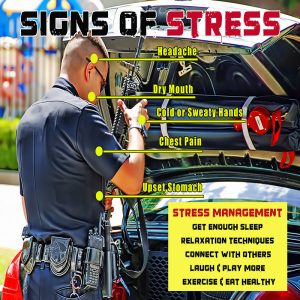
Police Stress and Officer Wellness: Causes, Consequences, and Strategies for Resilience
By Dr. Michelle Beshears
Law enforcement is widely recognized as one of the most demanding and stressful professions in society. Police officers routinely confront dangerous situations, make split-second life-and-death decisions, witness human suffering, and operate under constant public scrutiny. While stress is an unavoidable aspect of policing, it often goes unrecognized or unacknowledged until it begins to negatively affect an officer’s health, judgment, relationships, and job performance. Recognizing, managing, and reducing occupational stress has become one of the most important challenges facing modern law enforcement agencies.
Unlike many other professions, police officers are expected to remain calm and professional while responding to highly volatile situations. They are trained to project confidence, maintain emotional control, and solve complex problems under pressure. Unfortunately, this professional culture sometimes discourages officers from acknowledging their own emotional struggles. Many officers fear that seeking help may be interpreted as a sign of weakness or an inability to perform their duties. As a result, stress frequently remains hidden until it manifests as physical illness, emotional exhaustion, impaired decision-making, or destructive behaviors.
Although stress affects everyone at some point in life, police officers experience a unique combination of occupational and personal stressors. These stressors often accumulate over years of service, producing what researchers commonly refer to as cumulative traumatic stress. Rather than resulting from a single critical incident, cumulative stress develops through repeated exposure to traumatic events, organizational pressures, and personal sacrifices associated with the profession.
The National Institute of Justice (NIJ) has identified numerous organizational factors that contribute to police stress. Many of these stressors originate not from dangerous encounters with criminals but from the organizational structure of law enforcement itself. Poor leadership, inconsistent supervision, inadequate staffing, broken or outdated equipment, mandatory overtime, rotating shifts, excessive paperwork, and constantly changing assignments all create chronic workplace stress. Officers may spend one shift completing administrative reports and the next responding to violent crimes, fatal accidents, or domestic disturbances. This continual shift between routine administrative responsibilities and life-threatening emergencies creates significant emotional and psychological strain.
Work schedules also present substantial challenges. Rotating shifts disrupt normal sleep cycles and interfere with family life, social relationships, and physical health. Long hours and mandatory overtime often result in chronic fatigue, increasing the likelihood of poor judgment, reduced concentration, and occupational burnout. Many agencies have begun exploring alternative scheduling models, including 10-hour shifts, to reduce fatigue and improve officer wellness and operational efficiency.
In addition to organizational pressures, officers frequently experience significant personal stressors that compound workplace demands. Financial concerns, health problems, marital conflict, parenting responsibilities, caring for aging family members, and balancing work with personal life all contribute to overall stress. Many officers also work secondary employment, commonly referred to as moonlighting, to supplement their income. Although financially beneficial, working additional jobs further reduces opportunities for rest, recovery, and family interaction.
Beyond organizational and personal pressures, the very nature of police work exposes officers to experiences that most citizens rarely encounter. Officers routinely witness violent crimes, fatal traffic collisions, child abuse, suicides, domestic violence, and other traumatic incidents. Constant exposure to individuals experiencing pain, fear, grief, and crisis can gradually produce emotional fatigue and compassion exhaustion.
Police officers also operate under the continual awareness that every encounter has the potential to become dangerous. Traffic stops, seemingly routine calls for service, and domestic disputes can escalate into life-threatening situations within seconds. The responsibility of carrying a firearm, protecting fellow officers, safeguarding the public, and making legally and ethically sound decisions under extreme pressure creates a level of responsibility unmatched in most occupations.
Another unique source of stress stems from the uncertainty inherent in police work. Unlike many professions where tasks have predictable outcomes, police officers frequently respond to situations without knowing what they will encounter. They must rapidly assess evolving circumstances, gather information, make legal decisions, and resolve conflicts, often while being recorded by body-worn cameras, surveillance systems, or bystanders using smartphones. This constant accountability adds another layer of psychological pressure.
If left unaddressed, chronic stress can produce serious consequences affecting every aspect of an officer’s life. One of the earliest indicators is often emotional detachment. Officers may become increasingly cynical, suspicious, emotionally withdrawn, or less empathetic toward others. Although emotional distancing initially serves as a coping mechanism for repeated exposure to trauma, prolonged detachment can negatively affect interactions with colleagues, family members, and the communities officers serve.
Occupational stress also contributes to declining job performance. Fatigue, reduced concentration, impaired judgment, absenteeism, decreased productivity, and early retirement frequently result from prolonged exposure to unmanaged stress. Officers experiencing burnout may become less motivated, less engaged, and more prone to making errors in judgment or decision-making.
Behavioral consequences may also emerge. Increased irritability, excessive aggression, alcohol misuse, prescription medication abuse, and other forms of substance dependence sometimes develop as officers attempt to manage overwhelming emotional demands. Excessive force complaints, citizen dissatisfaction, and disciplinary actions have all been associated with officers experiencing significant occupational stress.
The impact of police stress extends well beyond the workplace. Family members frequently experience the consequences of chronic occupational stress through marital conflict, emotional withdrawal, communication difficulties, domestic violence, infidelity, and divorce. Children of law enforcement officers may also struggle with the emotional effects of a parent’s unpredictable schedule, repeated absences, and psychological withdrawal following traumatic incidents.
Perhaps the most serious consequences involve physical and psychological health. Chronic stress has been associated with hypertension, cardiovascular disease, obesity, gastrointestinal disorders, sleep disturbances, diabetes, weakened immune function, and other chronic medical conditions. Psychologically, prolonged exposure to trauma may contribute to anxiety disorders, depression, substance use disorders, and Post-Traumatic Stress Disorder (PTSD). Tragically, suicide remains one of the leading causes of death among law enforcement officers, highlighting the importance of early intervention and mental health support.
Recognizing these concerns, federal, state, and local agencies have increasingly prioritized officer wellness. A significant milestone was the passage of the Violent Crime Control and Law Enforcement Act of 1994, commonly known as the 1994 Omnibus Crime Act. Through this legislation, Congress recognized police stress as a national concern and directed the National Institute of Justice to conduct research, establish pilot wellness programs, evaluate intervention strategies, and assist state and local agencies in developing comprehensive officer wellness initiatives.
Today, many law enforcement agencies have implemented peer support programs, employee assistance programs, critical incident stress management teams, psychological services, wellness coordinators, and confidential counseling resources. Increasingly, agencies recognize that protecting officer mental health directly enhances public safety, improves decision-making, reduces liability, and strengthens community trust.
Researchers and criminal justice educators, including American Military University faculty members Dr. Mark Bond, Matt Loux, and Dr. Shana Nicholson, have identified numerous practical strategies that officers can implement to reduce occupational stress. Maintaining a healthy diet, reducing dependence upon fast food, exercising regularly, obtaining routine medical examinations, scheduling vacations, and ensuring adequate sleep all contribute significantly to long-term resilience. Living within one’s financial means may reduce the necessity for secondary employment, allowing additional time for recovery and family life.
Social support also plays an essential role in stress reduction. Peer support programs, commonly referred to as Patrol Buddy Programs, encourage officers to regularly check on one another and identify early warning signs of emotional distress. Equally important is maintaining friendships outside law enforcement. Spending time with civilian friends and family helps officers temporarily disconnect from the constant demands of police work and gain perspectives beyond the profession. When socializing with fellow officers, deliberately avoiding work-related discussions can also provide valuable emotional relief.
Although reducing stress is important, effective stress management remains equally essential. Not all stress is harmful. Moderate stress can sharpen awareness, improve reaction time, and enhance performance during critical incidents. However, excessive or prolonged stress becomes detrimental when it overwhelms an individual’s ability to cope effectively.
Successful stress management begins with intentional planning. Officers benefit from establishing realistic goals, maintaining balanced schedules, prioritizing responsibilities, and avoiding procrastination. Time management, regular exercise, sufficient sleep, limited caffeine consumption, and participation in enjoyable leisure activities all improve physical and emotional well-being. Equally important is recognizing personal limitations and accepting that perfection is neither realistic nor attainable in policing.
Developing a positive outlook also contributes significantly to resilience. While police work inevitably exposes officers to tragedy, violence, and human suffering, maintaining perspective, celebrating personal accomplishments, nurturing family relationships, and engaging in meaningful hobbies help counterbalance the emotional demands of the profession. Resilient officers recognize that asking for help demonstrates strength rather than weakness.
Ultimately, stress is an unavoidable component of policing, but it does not have to define an officer’s career or personal life. By recognizing stress early, identifying its sources, seeking assistance when necessary, and practicing healthy coping strategies, officers can maintain both professional effectiveness and personal well-being. As law enforcement agencies continue to embrace comprehensive wellness initiatives, the profession is gradually shifting toward a culture that recognizes officer health as an essential component of effective policing. Supporting those who protect our communities not only benefits individual officers and their families but also strengthens the agencies and communities they serve.
About the Author
Dr. Michelle Beshears holds bachelor’s degrees in Social Psychology and Criminal Justice, master’s degrees in Human Resource Development and Criminology from Indiana State University, and a Ph.D. in Business Administration with a specialization in Criminal Justice from Northcentral University. A former U.S. Army officer, she served 11 years in the military and has extensive experience in criminal investigations through both military and civilian law enforcement, including work with a local sheriff’s department, a state drug task force, and the FBI. She lives in Clarkridge, Arkansas, with her husband, Dr. Michael Beshears, and their family.
